How to provision like a pro for your next offshore adventure
For many first-time transatlantic sailors, provisioning is one of the most daunting jobs. But it doesn’t have to be, as Helen Fretter finds out at the ARC rally
Napoleon is credited for first decreeing that an army marches on its stomach, but it’s a fair bet that many a ship’s captain had already worked out that a well fed crew is a happy crew. When the regular rhythms of the day are blurred by watch systems and shifting time zones, it’s meal times that can shape the days at sea.
But how do you know what food to take – and how much? Every year ahead of the Atlantic Rally for Cruisers, organisers World Cruising Club run a comprehensive schedule of seminars. Clare Pengelly’s excellent talk on provisioning always attracts a full audience (and is worth attending even if you’ve listened to it on a previous year, as she updates lots of information, such as local suppliers in Las Palmas and St Lucia), and offers a really in-depth guide to victualling and menu planning. Here are some key points to consider:
Getting started
As with everything else on the boat, decide how you’re going to designate responsibility. Most boats rotate galley duties across the crew, on others one person will take the lead. But having a plan means that even if the usual cook is out of action, perhaps with seasickness or catching up on sleep, whoever is making the next meal has a rough clue as to what to cook and where to find it.
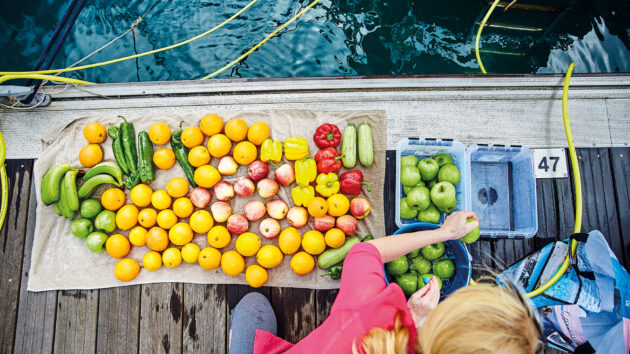
Many fruits and vegetables will last longer stored dark and dry. Washing is optional but many crews choose to. Photo: James Mitchell/WCC
A five-day rotating menu, with a designated ‘chef of the day’, should guarantee nobody gets too bored with either cooking or eating the same thing on repeat.
For the first few days, choose food that is simple to prepare, easy to eat and gentle to digest. If preparing meals in advance, portion them for a watch, say 1-3 people, rather than for the whole crew. A top tip is to portion meals into a freezer bag, but freeze the bag inside a box so you get blocks that can be stacked easily and take up less precious freezer space.
Decide on your boat’s alcohol policy, and plan ‘happy hour’ accordingly – it doesn’t have to involve alcohol, but could be a virgin cocktail/zero beer and a few snacks, to bring the whole crew together in the early evening.
Snacks can take on serious significance on a long crossing. Look down the calendar for any birthdays, festivals, and other random or important moments you want to celebrate (perhaps the halfway point?), and squirrel away a few special treats to mark the occasion. You might consider rationing, either week by week, or having a box for each individual, to avoid points of conflict.
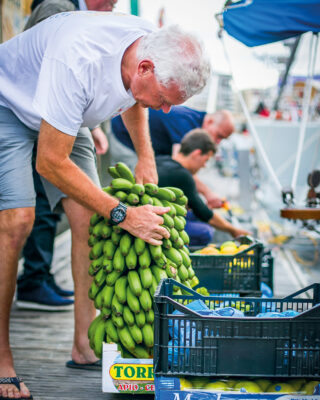
A hand of bananas is a fun purchase, especially if
you have a larger crew, but check for critters. Photo: James Mitchell/WCC
Water first
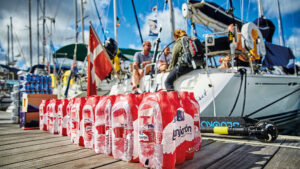
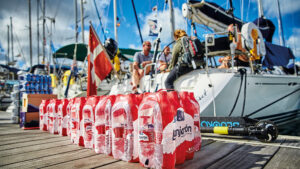
It’s easy to focus on food, but plan your water provisioning from the outset. At home most people can use 70-140 litres of water per person, per day. While much of that usage won’t apply at sea (running a washing machine, dishwasher, long showers etc), having enough water on board for a full crew adds up quickly.
An absolute bare minimum of 3.5lt per person per day for drinking/cooking/teeth cleaning, for four people over 30 days, totals 420lt – plus an emergency reserve. Even if you have a (well-tested) watermaker on board, make sure you use multiple tanks and large water bottles, and keep everyone on a water budget.
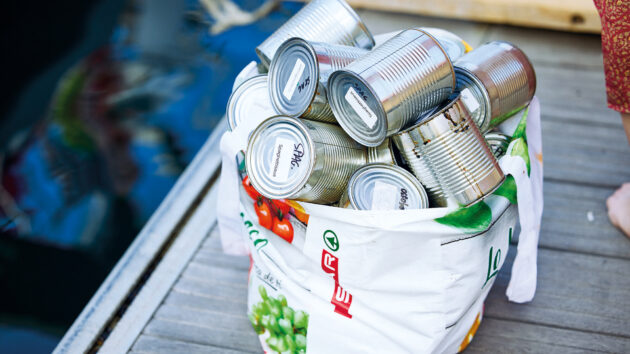
Label cans and strip the paper off if you are storing them near the bilge. Photo: James Mitchell/WCC
Tricks to conserve water include taping down taps to avoid them getting accidentally knocked and turned on (for example, when stowing sails or wet gear in the heads); using a plant spray bottle for rinsing dishes; and buying a small pump (available from many electrical shops in Las Palmas) for spill-free decanting when transferring water from large bottles.
However, it’s equally important to make sure people drink enough to avoid dehydration, which can exacerbate seasickness. Have named water bottles to make sure everyone can monitor their own intake and keep an eye on each other. Pengelly says a typical scenario is the skipper who powers through the first few days on coffee, doesn’t drink enough water, and gets dehydrated and grumpy!
Keeping things cold
In all but the most luxuriously appointed yachts, fridge and freezer space is going to be at a premium, so you’ll need to plan how to best utilise it. First work out how cold your freezer actually is – if it only operates at 0°C to -6°C then food will only be good for a few days.
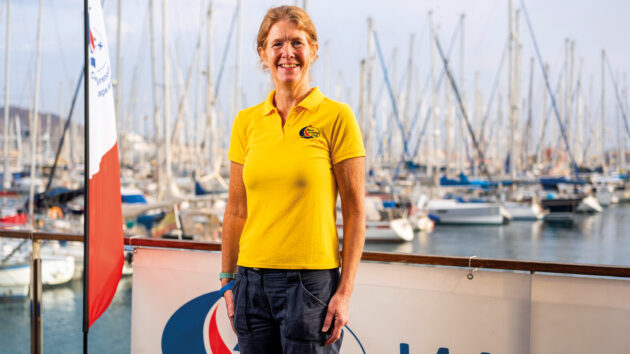
WCC’s Clare Pengelly advises ARC participants. Photo: WCC
Many boat freezers will chill down to -6°C to -12°C, so will keep food for around 15-20 days. A home domestic freezer usually maintains a temperature of around -18°C, freezing items for up to three months, and some well insulated boat appliances can achieve similar. A bluetooth thermometer inside the freezer can be useful to check temperature without opening it.
Fill your freezer with frozen food to start with, ideally well in advance, and keep the freezer 100% full for the first week if you can. Then eat from the top down – the bottom will be the coldest, so eat those items last. If the freezer fails, eat the defrosting food in order of risk – so chicken before beef etc.
Rather than opening the fridge repeatedly, an old fashioned ‘evaporating fridge’ – ie a damp cloth in a cool sink – can be used to keep things like water bottles cool.
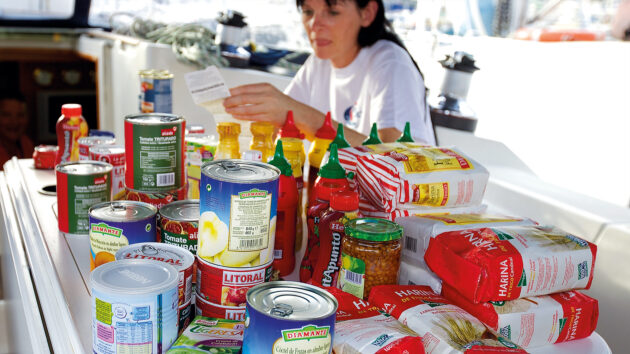
Shop in stages, dry goods first. Photo: Ian Roman
Make a stowage plan
Decide where you are going to put everything, and make a stowage chart or spreadsheet. Do you want to put all similar items together, or group things by week to avoid repeatedly pulling up saloon cushions?
Remove as much packaging as you can dockside, which reduces the risk of bringing insects aboard, as well as the weight and volume of waste (it’s much easier to recycle packaging in Las Palmas than the Caribbean islands). Double-wrap sachets, and dried goods like pasta, bread and flour in plastic bags or watertight boxes to avoid infestation. Try not to buy it all from the same shop, or store it all together.
Cans and saltwater don’t mix – steel (used for most food cans) can rust, aluminium (often in drinks cans like tonic water or beer) can corrode, and not all have a plastic lining. Write on them what’s inside, and remove the paper if you’re storing them under floorboards to save clogging your bilge pumps with disintegrated labels.
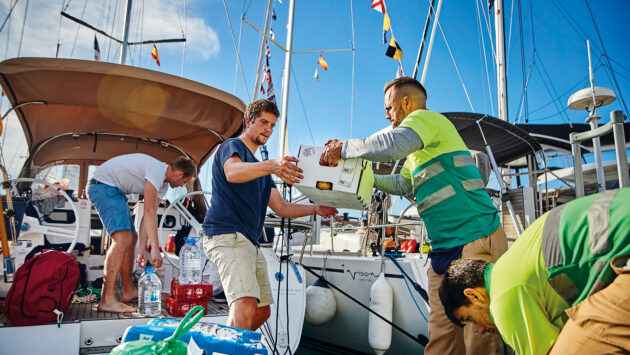
Many suppliers in Las Palmas will deliver direct to the yacht. Photo: James Mitchell/WCC
Prolonging life
Vacuum packing meat can prolong its life, up to a couple of weeks in a fridge (with caution), and two months or more frozen. Some butchers in Las Palmas will vacuum pack produce, but if sailing around the world Pengelly suggests you might consider investing in your own vacuum sealer (often sold for cooking sous vide). Avoid using thin plastic, which can lead to freezer burn.
If setting off from Las Palmas or elsewhere in Spain, a cured leg of jamón will keep for two months if stored carefully – but be sure to have a sharp knife and gloves for carving (and to dispose of the bone appropriately). To carve, pull back the fat, remove slices of meat, then lay the fat back over it. Rubbing with salt can help extend its life.
Eggs should be stored in a cool place, but not fridge cold, and best not wiped or washed. They should also be kept away from smells that could taint them, eg diesel. If in doubt, they can be checked by using the ‘float test’ (fresh eggs sink) – but it must be fresh, not saltwater.
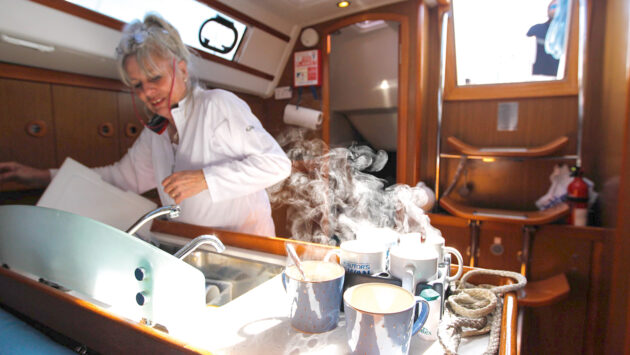
Ask the critical question – do you have enough teabags? Photo: Paul Wyeth
There are many theories on how to best stow fruit and vegetables, but the key requirements are keep it dry, dark, well-aired, and cool.
Citrus fruit keeps well, and even if shrivelled on the outside will usually be good to eat, these can be kept in swinging nets. If choosing apples, green will last the longest. Buying a whole hand of bananas makes everyone feel like a true adventurer, but store it separately, and wash to remove any critters.
Pengelly advises that you don’t need to Milton wash or scrub fruit – a visual inspection and wipe down is fine – though the pre-departure pontoons at the ARC often have crews industrially washing produce. More important, is keeping it dry – something to bear in mind if you’re getting your delivery on a rainy day.
Vegetables with a low moisture content – like leeks, carrots, potatoes and cabbages – usually last the longest. Carrots and iceberg lettuce can be wrapped loosely in foil or kitchen paper, while onion/ginger/garlic keep well in swinging nets. Don’t even consider vegetables like broccoli or mushrooms – they will rapidly turn to mush.
Even with the careful stowage, expect to lose around 10-15% of the food you buy to spoiling.
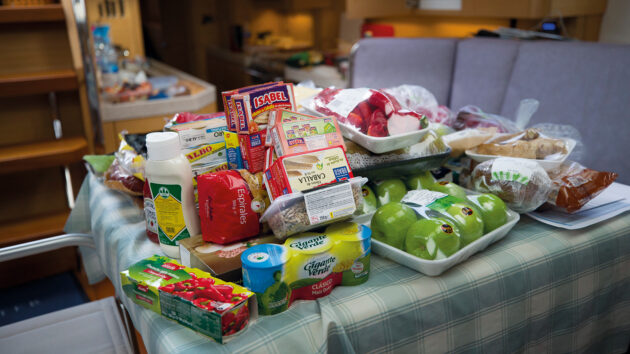
Review what can be eaten uncooked. Photo: TimBisMedia
How to shop
Shopping for a month or more with no ‘top-ups’ can be daunting. Pengelly advises breaking it down into four separate tasks:
- 1. Dry goods, non perishable foods and household items (don’t forget to account for loo roll, soap/shampoo, and cleaning products)
- 2. Water and drinks
- 3. Meat (allowing time for it to be frozen on shore power)
- 4. Fresh food, fruit and veg (aiming for a delivery two-plus days before the start)
When starting to write a shopping list, get everyone involved so you know their likes/dislikes, plus any allergies or intolerances.
On your first shop, only buy 80% of what you think you need – then pack and stow it. Then add more if needed.
There is a whole eco-system in and around Las Palmas of shops and suppliers who are used to accommodating ARC crews. They include Hyperdino, a family-run supermarket that has worked with the ARC for years; a large Carrefour hypermarket that offers free delivery (over a certain spend, previously €300); Chira greengrocers and Mercado butchers; and the upmarket El Corte Ingles department store, which is useful for specialist foods, allergen-free or special diets, and fancier kitchenware. There are also European supermarkets nearby, ranging from Lidl to M&S.
Many suppliers will deliver to the pontoons – though bear in mind deliveries can take place very late in the evening, but car hire is usually inexpensive and useful if you also need to visit hardware stores on the outer industrial estates, or have time to explore the island a little.
 If you enjoyed this….

Yachting World is the world’s leading magazine for bluewater cruisers and offshore sailors. Every month we have inspirational adventures and practical features to help you realise your sailing dreams.Build your knowledge with a subscription delivered to your door. See our latest offers and save at least 30% off the cover price.
Note: We may earn a commission when you buy through links on our site, at no extra cost to you. This doesn’t affect our editorial independence.
The post How to provision like a pro for your next offshore adventure appeared first on Yachting World.