Celtic Sea dash sees Yachting Monthly Triangle fleet into Kinsale
The Yachting Monthly Celtic Triangle Race is underway, with the fleet completing the first 200-mile leg from Falmouth to Kinsale
Photo: Luke Williams
Less than a day after leaving Falmouth, the first boats of this year’s Yachting Monthly Celtic Triangle Race began arriving in Kinsale, covering the roughly 200 miles at an average speed of over 10 knots.
Having started between 1010 and 1030 on the morning Sunday 31 May, 2026, the 33-boat fleet. made up of double handed and single handed crews, was faced with light but building south westerly breeze under a largely leaden sky. The heatwave of the week before had faded as final preparations were made on the pontoons of Falmouth Haven and Port Pendennis, between which the fleet was split.
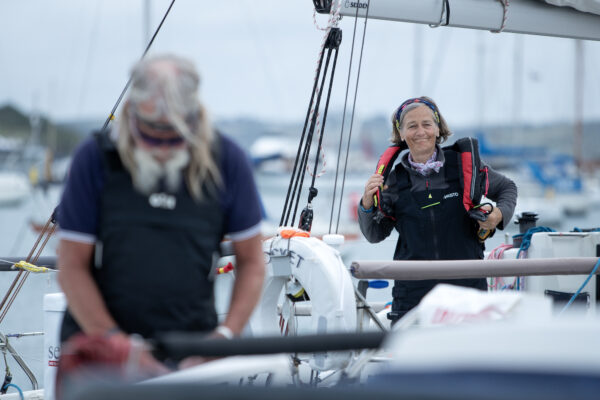
Welcomed to Falmouth by the Royal Cornwall Yacht Club, the crews enjoyed a social at the Musto store in town, and a race briefing and curry at the RCYC overlooking a serene and sunny Falmouth harbour. Battle flags, some going back as far as 1986 fluttered in the breeze as final preparations were made aboard boats – some boats frantically sought engine parts and replacements for frayed halyards, while others sat and sipped beer or munched fresh pasties. The race, founded in 1984 by the Royal Cornwall Yacht Club and Yachting Monthly, runs biennially and after a short hiatus, was resurrected in 2025 and is being run again this year, brining to back into sync to alternate with the Azores and Back Race, for which the second leg acts as a qualifying passage. The Yachting Monthly Celtic Triangle Race aims to be a Corinthian event for both serious race crews as well as cruising sailors having a go at offshore racing, and is open to single- and double-handed crews aboard yachts from 25ft to 47ft.
Sunday morning dawned calm and overcast, but the breeze, set to build progressively during the first part of the two-week race, filled in enough to give the boats a decent fetch southward across the Pendennis line. With an ebb tide, the fleet were shy of the line, keen to avoid the 15 minute penalty for being OCS, and with 200 miles to run, a few seconds were unlikely to matter. A number of boats then unfurled Code Zeros and quickly strode out for the horizon. Those staying further east on the line picked up the tide and breeze first and quickly opened up a lead, including Chris Hanson and Sam Strover’s Sunfast 3300 Rockit. Within 25 minutes, the last boats in the fleet – the more cautious cruising boats – had also crossed the line.
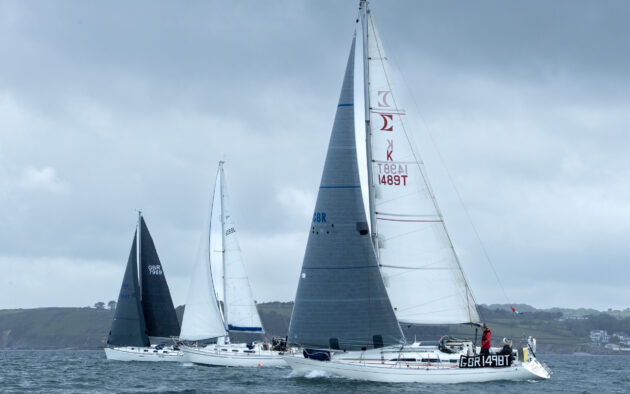
Lady Penrose sets off from Pendennis Point in leg 1 of the Yachting monthly Celtic Triangle Race 2026.
Photo: Luke Williams
Having rounded the Lizard, the crews faced a beat to Land’s End, before bearing away onto a port tack fetch, rounding the TSS which was an exclusion zone for the race, then heading (more or less) straight for southern Ireland. The long summer days meant that much of this was done in daylight. Rockit maintained its early lead and crossed the Kinsale finish line at 0850, in a corrected time of 23 hours 19 minutes and 59 seconds.
Chris Hanson said: ‘Rockit was fortunate to have near perfect conditions, epsecially after the TSS corner. As the wind built, Rockit took off at frequently greater than 17 knots and rarely less than 11 knots. A battle for line honours with Murphy 2 [Pogo 1250] took place in the night with us grabbing that with a finish at 0850, crossing the finish line on a gust at 16knots.
‘Life on board was wet, wet, and wet with little sleep but amazing fun and a great welcome in Kinsale as we pulled in,’ he addded.
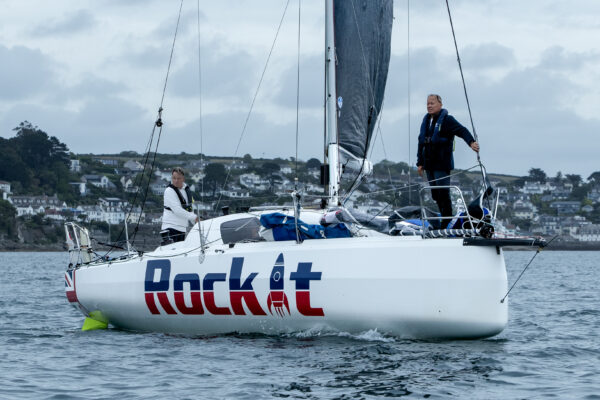
Sam Strover (L) and Chris Hanson (R) aboard Rockit.
Photo: Luke Williams
They were followed in the corrected time rankings by Jan Collins on Sun of a Gun 3 and Mik Underdown on Kaya II. Polished Manx, a Beneteau First 40.7, sailed by Kuba Szymanski and Adrian Kucmin were the 12th and last boat in class one to arrive in a still very respectable corrected time of 1 day, 4 hours, 40 minutes and 6 seconds. The fact that all 12 boats finished with five hours of each other demonstrated how close the racing was.
Kub Szymanski said, ‘This year we sailed our [course] fastest, two hours faster than last year, but came last in our group. What does it mean? Competition is very good and we didn’t try hard enough. After this disappointment come reflection – we are still doing what we love with people we love being around.’
Class two was was by Nigel Davies, sailing solo aboard Sunfast 3200 Delay No More, in a corrected time of 1d 1h 20m 57s, with all but one of the 10 boat class finishing the line within little more than an hour, again showing fiercely close racing. Zanzibar, sailed by Inka Luhrs and Richard Bretherton came second on corrected time, with Kate Cope and Louis Hockings-Cooke in third.
Solo sailors topped class three with Madelon Kuiper aboard Winner 9.50 Bliss in first and George Isted on Furiosa in third. Madelon crossed the line at 16:51 after one day and six hours of racing, while (almost) the last boat to finish, James Porter’s Sun Odyssey 349 Moonshadow was over the line before night fell at 2105. The only boat remaining on the course at the time of writing was Contessa 32 Liamar, the oldest though not smallest boat in the fleet, that had struggled to hold the rhumb line as the wind shifted in the wake of the faster boats.
The crews then had time to rest, repair various gremlins on their boats including alternator belts, leaking hatches and corroded electrical connections. The next leg was scheduled to start at 1000 on Thursday 4 June, taking the fleet over 300 miles around the Fastnet Rock before heading to Treguier in Brittany, although a forecast tropical storm was being managed by the Race Officer Chris Davies as it tracked to coincide with the fleet’s planned race across the Western Approaches.
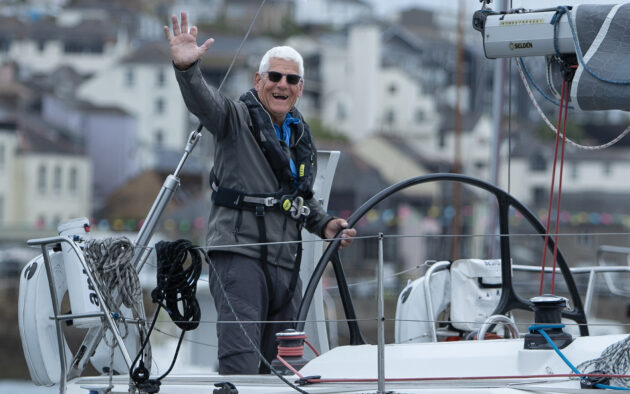
KJ Kroon sets off aboard Inspirit.
Photo: Luke Williams
The post Celtic Sea dash sees Yachting Monthly Triangle fleet into Kinsale appeared first on Yachting Monthly.