
Monitoring your yacht remotely: The modern technology helping you keep an eye on your boat
Modern yacht owners are increasingly turning to connected systems to ensure their boat is ready to sail the moment they step aboard

Walk the pontoons in any busy marina and you can often feel the difference between a yacht that is ready to go and one that isn’t. Neatly coiled lines and a quiet sense of order suggest a yacht that will work in a turnkey fashion. The kind of readiness that turns a short weather window into an opportunistic sail, rather than a troubleshooting session.
Increasingly, the expectation of modern owners is of a yacht that behaves itself and is ready to go. Owners are time-poor, sailing time is often condensed, and the tolerance for arriving aboard only to spend the first day fault-finding is lower than it used to be. These days owners want fewer preventable surprises at the start of a trip, and need less dependence on physically being there to keep the yacht in good order.
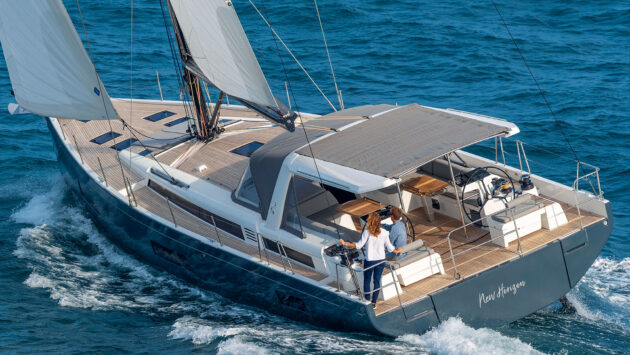
Beneteau has adopted Seanapps technology on its new builds. Photo: Gilles Martin-Raget
Monitoring your yacht remotely: Pursuit of readiness
A ready yacht isn’t perfect, but it is broadly predictable. Batteries behave as expected. Bilges stay dry. You don’t spend the first precious half-day checking that nothing has gone awry since the last visit.
Traditionally, the solution was human: time, knowledge, and a good support network. A helpful yard. A guardian who runs systems, checks lines, keeps an eye on weather and deals with the small issues before they become big ones. That remains fundamental – particularly when owners live far from their yachts, or use them in short, intense bursts.
What’s changing is the layer that sits on top of that support. Technology that alerts you of problems even when you are far from your boat.
Connected systems don’t replace seamanship or maintenance, but they do make the yacht legible when you’re not there. They turn a hunch that something ‘feels off’ into notifications of what has changed, and when. They give owners or yard staff the chance to intervene early – and early fixes are usually cheaper, easier, and far less likely to steal a weekend.
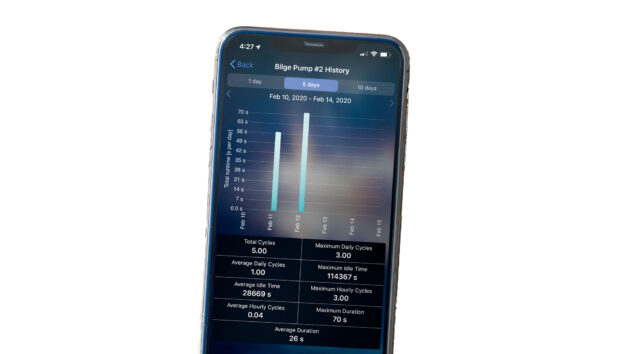
It isn’t glamorous. It’s about shorepower that trips out, a bilge pump that starts cycling more often, a fridge temperature creeping up. The value to an owner isn’t constant information, but the right information at the right time.
Data from the modern breed of smart sensors can be viewed on your phone
Tide change
Nick Heyes, managing director of Digital Yacht, describes the recent shift in this connected tech as a move from bolt-ons to platforms. For years, yacht technology arrived in pieces: a box for this, an app for that, each doing its own job but rarely giving you one coherent picture of what was happening aboard. The change, he says, is that it’s finally starting to work seamlessly together.
“It’s like the early days of smart homes,” says Heyes. “You could buy clever devices and you’d feel very modern, but you were still running around with different apps and different logins. The magic isn’t another gadget. The magic is when it all joins up – when it becomes one system that quietly does its job in the background.”
That joined-up part isn’t just a nicer interface. It changes outcomes. “Owners don’t want to become data analysts,” he says. “They want the yacht to make sense. They want to glance at a screen and know, with confidence, that everything is as it should be – or, if it isn’t, a clear nudge that something has changed and needs attention.”
When choosing smart systems, check data requirements or any monthly subscription fees. Built-in SIM cards can remove the need for wifi connectivity.
Downtime – when the yacht is out of service for maintenance or similar – is central to this. Not just for private owners, but particularly in charter and shared-use fleets, where a small fault quickly becomes a cancelled handover.
“If you can monitor properly and catch trends early, you keep yachts in service. You keep owners sailing,” says Heyes. “In fleet use it becomes a commercial reality – fewer cancellations, fewer emergencies, better standards.
“Aviation doesn’t wait for something to fail at the worst possible moment. They treat reliability as something you manage. We’re moving towards that mentality.
The more you can see, the less you’re guessing — and the less you’re guessing, the fewer trips you lose.”
Heyes points to the accelerant behind it. “The influence of AI has grown exponentially,” he notes. “Its significance can’t be underestimated. Pair solid, dependable hardware with the pace that software can now develop, and suddenly the cost comes down, the quality and accuracy go up.”
Connected as standard
Every market shift has its ‘this is now normal’ moment. One of the more telling developments in the era of the ‘smart yacht’ is when a mainstream production builder embraced connected tech in the fit-out stage, rather than leaving it to owners to add later. Beneteau has adopted Seanapps across the Group, with an explicit ambition for it to become standard fit.
Their stated aim was for the circa 9,000 boats the company builds every year to be equipped with Seanapps as standard equipment.

Boat share and peer-to-peer platforms have scaled up rapidly in recent years (the US market is valued at over $25million per annum) and have been early adopters of smart tech. Photo: Matt Prosser/Flexisail
The significance isn’t that this makes yachts ‘smart’, but that it normalises a joined-up connected layer on everyday cruising yachts, that can provide remote oversight of key systems and maintenance prompts. There are still limitations – what you can see depends on the yacht’s fit-out and the quality of its connection. But it does shift expectations, because ‘connected’ is no longer only an aftermarket upgrade added piecemeal.
Connected yachting is now arriving at its ‘this is normal’ moment – not because every yacht is suddenly full of sensors, but because the building blocks are becoming familiar.
If you fit a modern electronics package today, you’re increasingly buying into an ecosystem rather than a collection of standalone screens. Apps are part of how owners update charts, transfer routes, check system status, and move information between devices. Your phone becomes an extension of the yacht, and remote monitoring follows the same pattern: a hub aboard, a familiar app, and alerts delivered wherever you are.
In practical terms, many standard set-ups now allow owners to check position, set a geofence, receive an alert if shorepower drops, and keep an eye on the boat’s vital signs: power, water, heat and unexpected movement.
Garmin’s OnDeck and Raymarine’s YachtSense sit in this space, alongside dedicated monitoring systems that focus less on performance data and more on the unattended-yacht essentials. Some yacht builders, such as Y Yachts and Oyster, have their own smart systems which include remote monitoring.
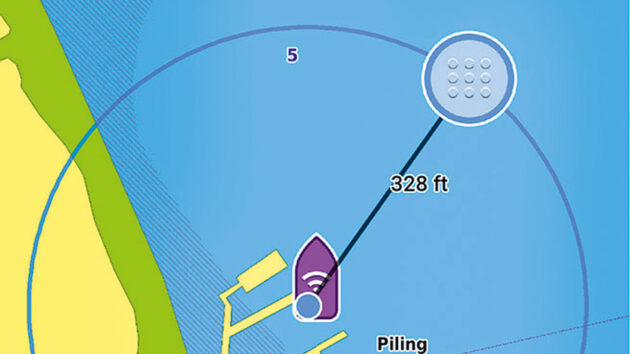
Geofencing for boat movement is built into Garmin’s system. Photo: Garmin
Open playground
But while big brands have made remote monitoring feel normal, another interesting development has happened alongside that: the market has opened up, and smaller innovators can now build useful tools without needing to own the entire ecosystem.
Open-source software makes it easier for systems to talk to each other, for owners to tailor technology to what they care about, and for niche solutions to flourish.
Through his YouTube channel, Smart Boat Innovations, Rob Ferenczi spreads knowledge about how owners can build their own systems on a relatively small budget using accessible components, including a Raspberry Pi, and open-source software.
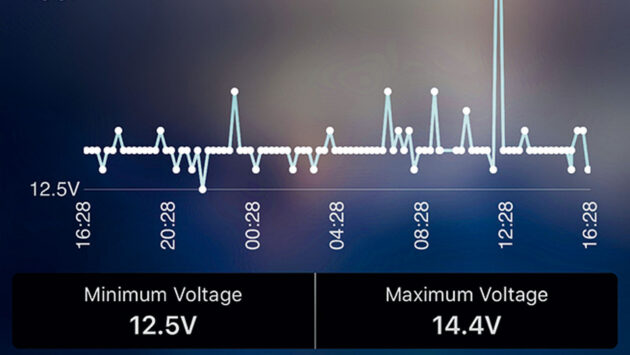
One underplayed element of remote monitoring is the ability to track patterns that might indicate something is beginning to go wrong before permanent damage occurs
At one point Ferenczi left his yacht anchored under Sydney Harbour Bridge while he was back in the UK building up his cruising fund, keeping an eye on the boat using a public webcam of the harbour. The lesson was clear: when away from your yacht, the unknowns occupy your head.
What his videos teach now replaces such workarounds with proper signals and alerts chosen for usefulness – battery levels, bilge pumps, engine and anchor alerts – and take yacht owners from the basics of creating smart switches up to integrated systems.
Article continues below…

Best emergency bilge pumps – high capacity pumps for salvage
As someone who has prepared my own boat for Category 1, finding the best emergency bilge pumps that comply but…
A year of using the Garmin Quatix – can a Garmin marine smartwatch change your life?
It was a personal low point when I realised I was heading to a weekend laser race with an egg…
Monitoring your yacht remotely: Connected berths
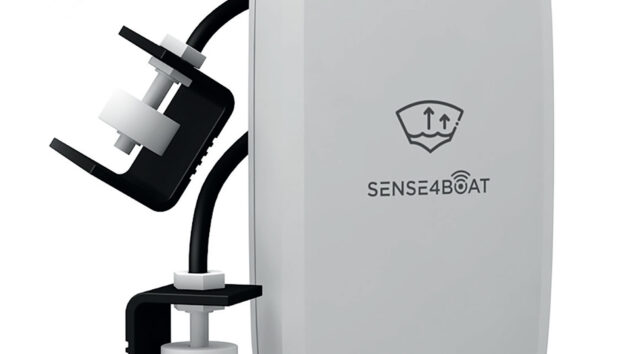
Remote monitoring isn’t just for owners. Marina operator D-Marin has begun rolling out monitoring layer across its network in collaboration with Sense4Boat – a system designed specifically for unattended yachts. The sensors focus on the things that most often turn into costly incidents in marinas: water ingress, battery issues and overheating, fire and heat, and unauthorised movement.
For Gorjan Agačević, CEO of Sense4Boat, the scale matters because it turns monitoring from a niche upgrade into something you can normalise across an entire marina group.
“This isn’t a handful of early adopters,” he says. “We’ve installed 20,000 sensors across six countries.
“Once you reach that sort of scale, you stop talking about gadgets and start talking about standards – what a modern berth holder should reasonably expect when their yacht is unattended.”
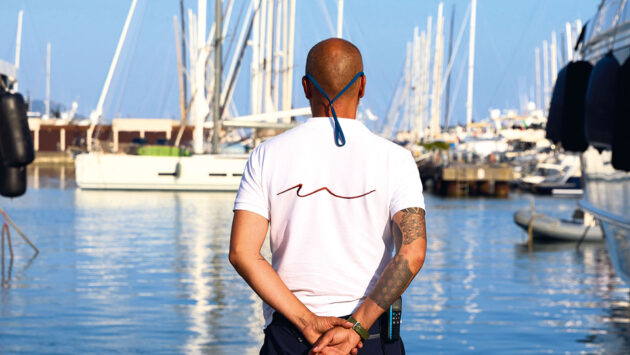
D-Marin staff get early warnings from Smart4Boat systems
D-Marin says that since fitting the system across most berth holders’ yachts, the marina group has had over 100 alerts, some of them critical. In one case, it helped raise the alarm during a battery fire – exactly the sort of incident marina operators worry about, because fires rarely stay politely contained to a single berth.
Nataša Subašić, regional director for D-Marin in Croatia, describes the practical difference as speed. “You don’t want to discover a problem when it’s already visible from the pontoon,” she says. “You want to know while it’s still small – while it’s a rising temperature, a battery behaving oddly, a trace of water where it shouldn’t be. That’s when you can act quickly and quietly.”
Agačević points out that this only works if the system is frictionless. “If it needs rewiring, or a hub, or a complicated install, uptake collapses,” he says. “The job is to protect unattended yachts from the big four – water, heat, batteries and theft – and to get the right people moving quickly when something changes.”
Perhaps the biggest reason the rollout has worked is that it isn’t sold as another optional extra. At D-Marin, annual berth-holders receive the monitoring sensor pack as part of their contract, so the decision becomes about using it – not justifying it.
There has been a social effect too. “The surprising thing is how quickly it becomes normal,” says Subašić. “People start asking whether the yachts around them are monitored as well. They understand how marina fires happen – it’s rarely one yacht, it’s what happens next. Anything that gives earlier warning doesn’t just protect one owner, it helps protect the whole dock.”
 If you enjoyed this….

Yachting World is the world’s leading magazine for bluewater cruisers and offshore sailors. Every month we have inspirational adventures and practical features to help you realise your sailing dreams.Build your knowledge with a subscription delivered to your door. See our latest offers and save at least 30% off the cover price.
Note: We may earn a commission when you buy through links on our site, at no extra cost to you. This doesn’t affect our editorial independence.
The post Monitoring your yacht remotely: The modern technology helping you keep an eye on your boat appeared first on Yachting World.